Featured
Table of Contents
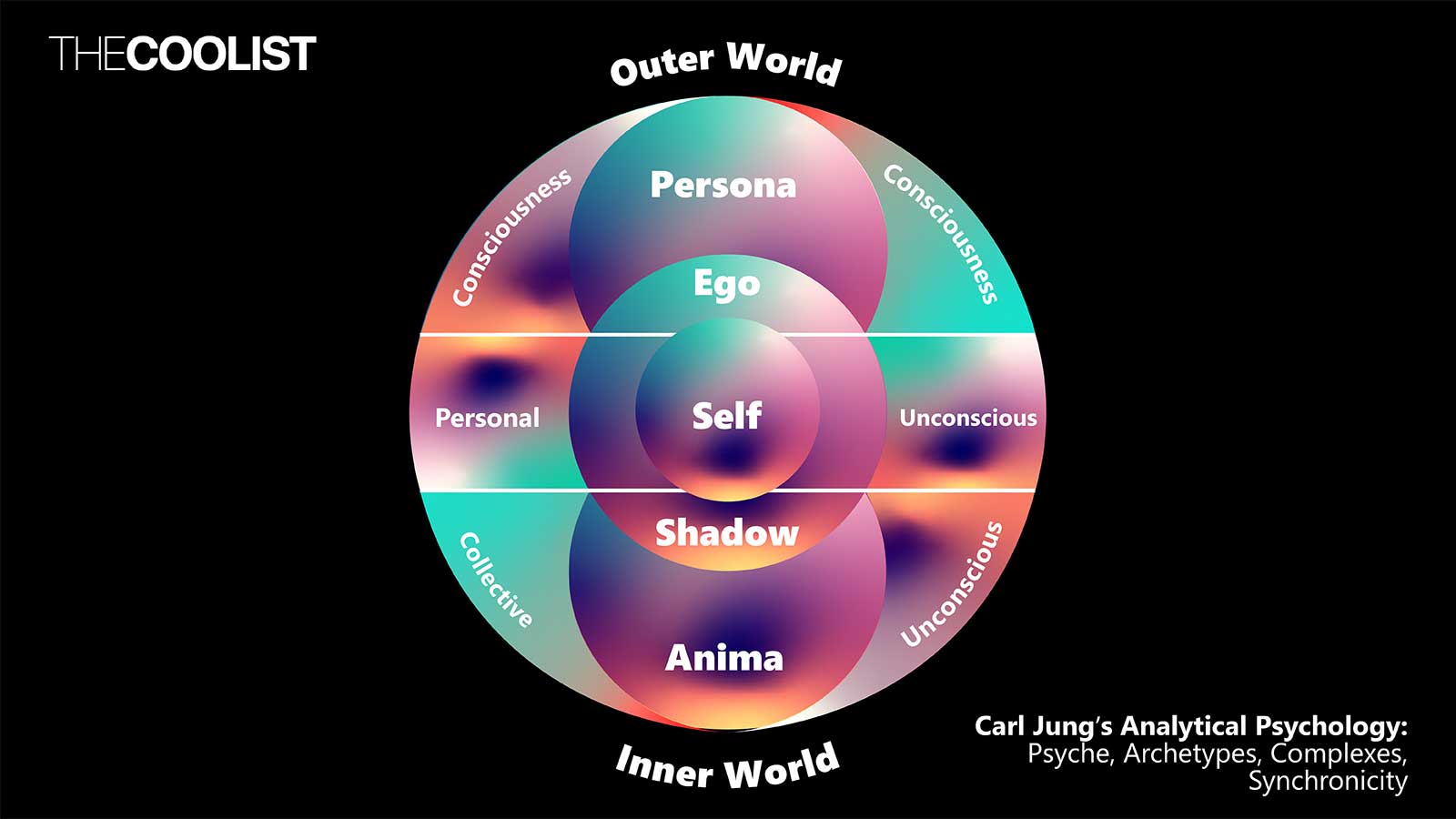
This is not implied to be an extensive list but is developed merely to give you a sense of what logical psychology is everything about. The individual subconscious stands for everything within the individual's psyche that is unidentified to them. One of the distinct characteristics of deepness psychology is that it recommends numerous levels of the unconscious.
For Jung, the collective subconscious is a repository of primaeval pictures (archetypes) and behavioral patterns that are universal (cross-cultural) and olden. Jung thought about these images "cumulative" because they were not gotten by people in their lifetime. That is, the archetypes within the cumulative subconscious really did not represent discovered habits. Yet, they came to all.
Sheldrake, Morphic Vibration: The Nature of Formative Causation, 2009.) The psyche stands for the totality of one's being, including the body, mind, reactions, spirit, and spirit. For Jung, there was a personal subconscious pertaining to the individual's personality and lived experiences, and a cumulative mind shared by all. In modern-day psychology, the term psyche is sparsely made use of, as it has been changed by mind.
How Image Transformation therapy in Dalkey, Ireland Heals the Complete Person
Each people has a dominant function and a substandard function. Your is your primary means of examining information. It's the interior muscle that you've worked out one of the most since birth. Your is the opposite of your leading feature; it represents your weakest muscular tissue in terms of processing info. The objective right here is to get to the transcendent function In the.
These prehistoric pictures stand for the collection patterns of habits discovered in the cumulative subconscious. Archetypes represent semi-autonomous subpersonalities within the subconscious that influence most human habits. Jung's work concentrated on just a handful of archetypes, including the mommy, the daddy, the kid, the smart old guy, the hero, the charlatan, the anima/animus, the darkness, the maiden, and the self.
How EMDR Affects Neural Pathways
See: and While the archetypes are global and impersonal, the facilities are completely individual. An individual complex is a cluster of feelings based on the person's past experiences. A timeless instance is the Mom complicated. With this facility, a young boy's subconscious doesn't separate from his mother as he gets in the adult years.
A male with a mom complicated can not transport his masculine energy to end up being an independent, fully grown grownup. The shadow stands for whatever the private separations or cuts off from themselves in very early advancement. It's often described as the disowned self. Being familiar with and integrating the darkness is a vital very first step in one's individuation.
The Advantages of Collective Trauma Processing
Jung saw the anima-animus as jazzing up spirits or spirits within men and females. These archetypes play a vital role in a person's life, especially in their key connection. For Jung, anima and animus are important building blocks in the psychic framework of every man and woman. Integrating the anima-animus is concentrated on after incorporating one's darkness.
When it comes to C.G. Jung's analytical psychology, the 2 main approaches are: Desire evaluation Active imagination The key goal of deepness psychology is to develop awareness so the person can bring the unconscious to awareness to accomplish psychic wholeness. Individuals (the analysands) fulfill with their analyst normally each week.
Desire evaluation (or "desire job") was the central method for revealing the mind in Jung's analytical technique. For Jung, dreams given a method for us to bridge the space between our aware mind and our subconscious. He viewed dreams as a kind of love letter from the unconscious. In evaluation, the person (analysand) recalls a certain desire or series of dreams, and then the analyst asks probing inquiries to go deeper right into the desire's meaning.
Jung made use of active creativity to boost his desire evaluation. See: Much of the guides connected over include a "analysis checklist" for those who desire to explore these ideas in higher detail. Below, I'll highlight a couple of excellent "entry factors" to this work: Memories, Dreams, Reflections by C.G. Jung The Portable Jung modified by Joseph Campbell Individuation in Fairytale by Marie-Louise von Franz The Shadow and Evil in Fairytale by Marie-Louise von Franz Since 2014, I have actually been publishing comprehensive guides on this internet site.
Transforming Interpersonal Trauma
In enhancement to the guides listed above, see additionally: Forecast is an essential principle in psychoanalytic concept. This overview, influenced by Jungian Robert A. Johnson's exceptional book Inner Gold, highlights how we frequently project the very best parts of ourselves onto others (and how we can take them back). The mindful mind (or vanity) commonly stands up to interior processes like shadow job.
This comprehensive overview explores the archetype of the Everlasting Kid. Superb pointers for beginners and skilled professionals throughout a variety of Jungian-related subjects.
Archetypes have also been significant in forming religious beliefs and methods. The idea of the Wise Old Male, representing knowledge and assistance, shows up in various religious and spiritual traditions.
Understanding Complex Trauma Patterns
Making use of archetypes in New Age methods is commonly related to the belief in the interconnectedness of all beings and the idea of a cumulative awareness that transcends specific identifications. These concepts are not viewed as methods to do magic or see the future. They ar viewed as allegories with wich we might get an outsider viewpoint to undertand ourselves.
Jung, a Swiss psychiatrist and psychoanalyst, presented the principles of the subconscious mind, archetypes, and the collective subconscious. Jung's letter to Bill W, dated January 30, 1961, started by acknowledging the importance of AA in helping individuals struggling with alcoholism.

Latest Posts
Moving Beyond the Pattern of Codependency
A Mental Health Path Begins Here
Processing Depression Trauma-Informed Attachment-Based Therapy